Supreme Court Gives Trump Temporary Win in Mail-In Voting Fight
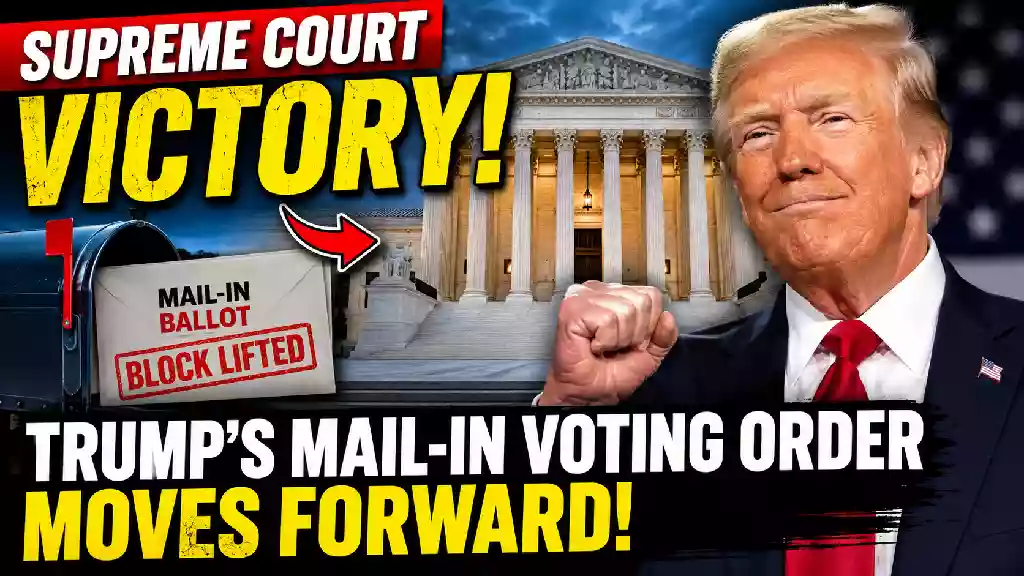
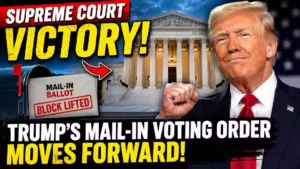
Supreme Court Gives Trump Temporary Win in Mail-In Voting Fight — The Supreme Court temporarily clears the way for the Trump administration to move forward with its mail-in voting executive order, setting the stage for further legal battles over voter eligibility and election policy.
Supreme Court Gives Trump Temporary Win in Mail-In Voting Fight
Supreme Court Temporarily Clears Path for Trump Mail-In Voting Order
The Supreme Court has given President Donald Trump a significant temporary victory in a legal fight over his executive order targeting mail-in voting and voter eligibility. The justices lifted a lower-court block that had prevented the administration from moving forward with the order, allowing federal agencies to continue working on its implementation.
The decision could have major implications for the administration’s election policies as the country moves toward the November elections. It also raises broader questions about the authority of the executive branch and when federal courts should intervene in presidential actions.
Former Deputy Assistant Attorney General and UC Berkeley Law Professor John Yoo called the decision “very important,” arguing that lower-court judges should not stop the executive branch before the government has taken concrete action that causes identifiable harm.
What Trump’s Executive Order Does
According to Yoo, Trump’s executive order contains three major components.
The first directs the Department of Homeland Security to collect lists of citizens and provide that information to states so officials can determine who is eligible to receive ballots.
The second directs the Justice Department to prioritize prosecutions involving people who assist individuals who are prohibited from voting under federal law.
The third, and most controversial, provision asks the U.S. Postal Service to study potential ways to prevent mail-in ballots from being delivered to people who are not eligible to vote.
The combination of these measures has placed the Trump administration’s approach to mail-in voting and election enforcement at the center of an increasingly contentious legal battle.
Why the Supreme Court Stepped In
A Massachusetts district judge had blocked the executive order before the administration had taken the steps necessary to put its provisions into practice.
Yoo argued that the timing of that injunction was a central issue in the Supreme Court’s decision. He said the federal government had not yet implemented the measures and that no one had demonstrated actual harm at that stage.
The Supreme Court’s action therefore gives the administration an opportunity to move forward while leaving room for future challenges if specific policies cause legally recognizable harm.
That distinction could become increasingly important as federal agencies transition from studying the order to creating concrete procedures.
Postal Service Faces the Toughest Assignment
The Postal Service provision could be the most difficult part of the administration’s plan to implement.
The agency would have to study how it could develop procedures to prevent ballots from reaching individuals considered ineligible under the administration’s policy. Yoo acknowledged that this would be a difficult undertaking.
However, he argued that the district court moved too quickly by preventing the Postal Service from even studying possible ways to implement the policy. In Yoo’s view, a court could intervene later if actual rules were adopted and someone could demonstrate that those rules caused harm.
The controversy therefore extends beyond mail delivery. It also involves the larger constitutional question of when courts should intervene in executive branch decision-making.
Yoo Says Other Provisions May Survive
Yoo expressed confidence that other portions of the executive order could ultimately withstand legal challenges.
He specifically pointed to the federal government’s ability to compile citizenship information and provide it to states. He also argued that the government can focus enforcement efforts on individuals who assist violations of voting laws.
Those provisions could become less controversial legally than the Postal Service component, although future litigation remains possible.
The Supreme Court’s temporary decision does not resolve every legal question surrounding the executive order. As implementation proceeds, opponents could challenge individual policies and procedures in court.
Will the Order Affect the November Elections?
The timing of the administration’s actions could be crucial.
Yoo suggested that the Supreme Court may have been concerned that prolonged litigation in lower courts could interfere with the executive branch’s ability to implement the order before the November elections. He said the Department of Homeland Security, Justice Department and Postal Service could potentially move quickly enough to develop procedures in time.
Whether that happens remains uncertain.
The administration still faces the practical challenge of developing procedures, coordinating across federal agencies and defending those actions against likely legal challenges.
More Legal Battles Could Be Coming
The Supreme Court decision may be only the beginning of another round of litigation.
Yoo predicted that states including California, New York and Illinois could seek further action from the Supreme Court in an effort to challenge the Justice Department and other aspects of the administration’s policies.
That could lead to additional disputes over federal election authority, voter eligibility, mail-in ballots and the balance of power between the federal government and the states.
For Trump, the immediate result is favorable: the administration has been given additional room to proceed rather than being stopped before implementation begins.
But the broader legal fight is not over. The next major test could come when federal agencies turn the executive order into actual rules and procedures. At that point, opponents will have additional opportunities to challenge the government’s actions.
For now, the Supreme Court’s decision gives the Trump administration a temporary opening to advance its election policy agenda — while setting the stage for potentially significant legal battles ahead.
#SupremeCourt #DonaldTrump #JohnYoo #MailInVoting #ElectionIntegrity #ElectionLaw #VotingLaws #VoterEligibility #USPolitics #TrumpAdministration